
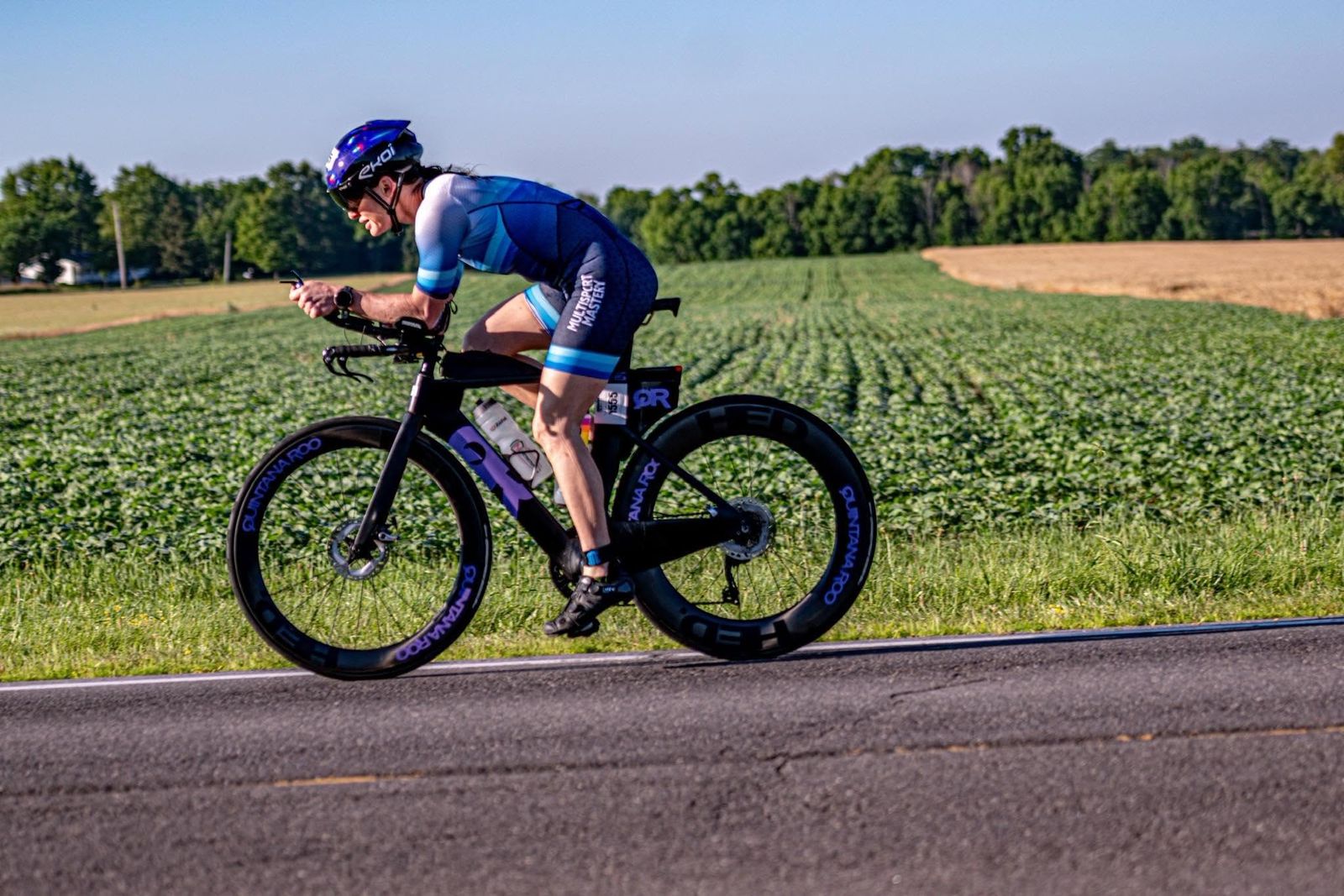
Functional Threshold Power (FTP) is widely used in triathlon to benchmark cycling fitness and prescribe training intensity. While it is a useful reference point, FTP represents only a narrow slice of performance. Triathlon racing, particularly in long-course events, places demands on the athlete that extend far beyond a single steady-state effort. Judging progress solely by FTP can therefore obscure several key determinants of race-day success. Here are five things you’re missing by chasing improvements with or judging progress solely by changes in FTP.
The short answer: FTP measures one fresh, roughly one-hour effort, while triathlon racing asks for hours of steady power under fatigue. Overall capacity, durability, fractional utilization, glycolytic ability and economy often matter more on race day, and all five can improve without your FTP moving.
What Is Overall Capacity?
FTP estimates the highest power an athlete can sustain for roughly one hour, yet most triathlon bike legs last considerably longer. Overall capacity (the total amount of work an athlete can perform over extended durations) is essential for effective race execution. Two athletes with identical FTPs may differ greatly in their ability to sustain power for three to six hours, manage terrain variability, and tolerate cumulative fatigue.
How to train it: Build capacity through progressive long rides, extended steady-state intervals, and accumulating quality volume at race-relevant intensities.
What Is Durability?
Durability reflects how well an athlete maintains performance as fatigue accumulates. FTP testing occurs in a fresh state and does not capture how power output, cadence control, or efficiency degrade over time. In racing, the ability to preserve submaximal power late in the bike leg is often more predictive of outcome than peak or threshold power measured early.
How to train it: Emphasize long sessions with quality work placed late, fatigue-resistant intervals, and consistent training density rather than isolated peak efforts.
What Is Fractional Utilization?
Fractional utilization describes how much of an athlete’s aerobic capacity can be sustained over long durations. FTP alone does not reveal whether threshold power is achieved efficiently or by operating close to physiological limits. Improvements in fractional utilization allow athletes to hold race-relevant power with lower metabolic cost, often improving bike-to-run performance without visible changes in FTP.
How to train it: Increase time spent just below threshold, extend interval duration over time, and prioritize aerobic development that shifts race power farther from maximal capacity.
What Role Does Glycolytic Ability Play?
Although triathlon is predominantly aerobic, glycolytic capacity still plays a strategic role. Short climbs, accelerations, and terrain changes require brief excursions above threshold. In long-course racing, however, excessive glycolytic contribution (often reflected by a higher VLaMax) can be counterproductive, increasing lactate production and carbohydrate demand at submaximal power. Successful long-course athletes are characterized not by maximal anaerobic output, but by a glycolytic system that is sufficiently suppressed to support steady power production and metabolic efficiency over extended durations.
How to train it: Limit excessive high-intensity anaerobic work, prioritize aerobic volume and steady power, and use controlled surges sparingly within long, aerobic-focused sessions.
Why Does Economy Matter?
Economy reflects the energy cost of producing power. Technique, neuromuscular coordination, strength, and aerodynamics all influence efficiency. Athletes with the same FTP can differ substantially in oxygen consumption, substrate use, and fatigue cost at race power. Improvements in economy can therefore lead to faster racing without measurable gains in FTP.
How to train it: Reinforce consistent cadence, improve position and aerodynamics, develop strength and stability, and accumulate race-specific riding that refines movement efficiency.
What Should Triathletes Measure Instead of FTP?
FTP is a valuable anchor metric but an incomplete one. True triathlon readiness depends on how well an athlete meets the specific duration, intensity, and fatigue demands of their event. Assessing capacity, durability, fractional utilization, glycolytic function, and economy provides a clearer, more actionable picture of performance than FTP alone. Most importantly, athletes and coaches must know what they are testing and why they are testing it. When metrics and training targets coincide with race demands, improvements translate directly to not just higher test numbers but better race-day outcomes.
Keep Reading
- Why Durability Matters
- Stop Chasing Exact Numbers: Why Power and Pace Ranges Work Better in Training
- How To Run Your Best Ironman Marathon
- What’s Holding You Back?
About the Author
Elizabeth Waterstraat | Founder and Head Coach, Multisport Mastery
Elizabeth Waterstraat is the founder and head coach of Multisport Mastery, with 20 years of coaching experience and 26 years as an endurance athlete. A USA Triathlon Level III Coach, she is a five-time Kona qualifier, five-time Ironman World Championship finisher and 12-time National Champion. She has coached athletes from beginners to professionals and from first-time finishers to world champions, helping them develop the fitness, skills, and confidence to pursue ambitious goals through consistent, purposeful training.
Her coaching philosophy is built on communication, education, and partnership, with an athlete-driven approach that emphasizes the process as much as the outcome. She believes effective coaching requires understanding the individual, maintaining focus on meaningful goals, and finding balance between athletic ambition and the demands of everyday life. Through her coaching and writing, Elizabeth encourages athletes to take ownership of their development, build confidence through knowledge, and create a positive, sustainable relationship with sport.
Read more about Elizabeth, or book a fit call to talk about your goals.