The Watch Problem
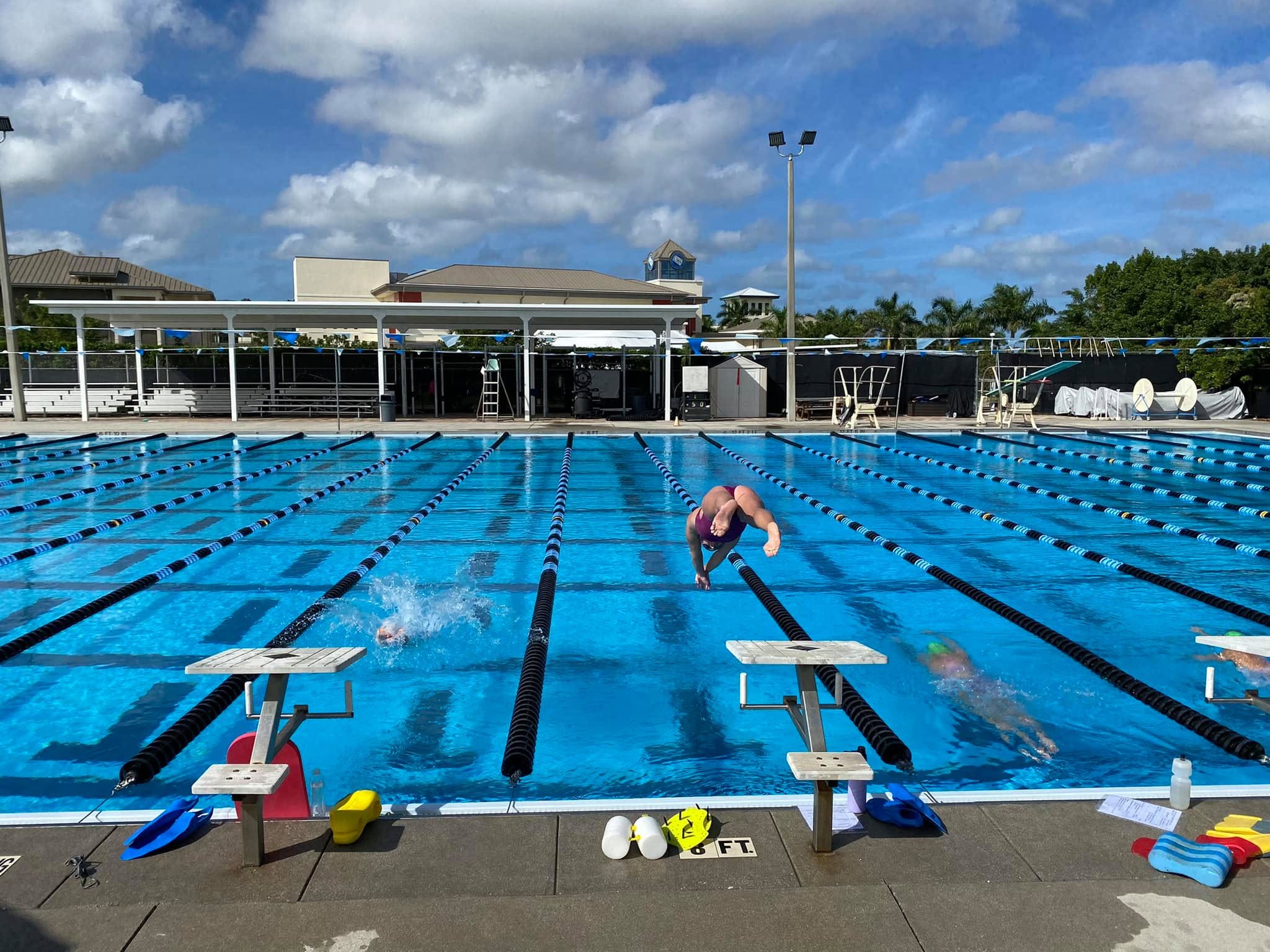
Watch a group of triathletes swim and you’ll notice a familiar pattern. Push off, swim a 100, hit the wall, check the watch. Make a small adjustment, swim another 100, check the watch again.
We’re constantly looking for evidence that something is working. A different hand entry, a change in the kick, a better catch. Surely one of these things should give us a few seconds per 100. We want to make a change and see the payoff immediately.
Sometimes that happens, especially for newer swimmers who have more room for technical improvement. For most of us who have been swimming for years, however, progress is rarely that straightforward.
We spend far too much time looking for evidence of improvement in the wrong place.
What Progress Really Looks Like
One of the more frustrating things about swimming is how slowly progress can happen. You can spend weeks working on something, feel like you’re doing everything right, and still see the same numbers on your watch.
The numbers don’t always tell the whole story.
Consider the difference between swimming a 1:45 that leaves you gasping at the wall and swimming that same 1:45 feeling like you could comfortably repeat it another ten times. Your pace hasn’t changed, but the effort required to produce it has. You’ve become more economical, more comfortable, and likely more capable of sustaining that pace over a longer distance.
That’s a pretty significant improvement, even if the clock doesn’t recognize it.
When we become too attached to seeing progress in our splits, we overlook changes in how we move through the water, how much effort we’re using, and how well we can sustain that effort. We can also become impatient with a process that needs more time than we’re willing to give it.
The One Thing That Has Always Worked
I learned to swim in my 20s. And when I say learned to swim, I mean truly learned to swim, not just learned how to swim better.
So I have plenty of personal experience searching for ways to get faster.
Over the years, I could probably name a dozen things that have helped. Different drills, technical cues, equipment, feedback from coaches, and adjustments that made sense at different stages of my development. Some worked remarkably well for a period of time. Others eventually stopped being useful as my stroke evolved.
Looking back over more than two decades of swimming, there’s really only one thing that has consistently moved me forward.
Consistency.
That’s not a particularly exciting answer, especially when we’re surrounded by videos, products, and advice promising to help us swim faster. The longer I’ve been in this sport, both as an athlete and a coach, the more convinced I’ve become that consistency is the foundation that allows everything else to work.
The 50 Out of 52 Question
The next time you’re frustrated with your swim progress, before you start looking for another technical adjustment, ask yourself something.
Have I swum consistently, three times a week, for at least 50 of the last 52 weeks?
Those aren’t magic numbers or a prescription for every athlete. They’re a way of asking whether you’ve given yourself a long enough period of uninterrupted practice to expect meaningful improvement.
For most athletes, the answer is no.
Swimming is as much a skill sport as it is a fitness sport. Developing a feel for the water, coordinating your breathing, maintaining your body position, and timing the different parts of your stroke all require repetition. The more frequently you practice those skills, the more natural and reliable they become.
Many triathletes, however, swim in fits and starts. They put together a good six-week block, take a couple of weeks away, come back for a month, miss another week because of work or travel, and then wonder why they aren’t getting faster.
The problem isn’t necessarily that they’re doing the wrong drills or that their technique needs another overhaul. It’s that they haven’t given their swimming enough continuity for those improvements to become established.
Every time they return after a break, some portion of their time in the water is spent getting comfortable again rather than building on where they left off.
The Real Cost of Time Away
In the last 20 years, I’ve had two significant stretches away from swimming. The first was during the pandemic when pools closed. The second was following thumb surgery, when swimming simply wasn’t an option.
Both times, it took me more than twice as long as I had been out of the water to feel like I’d found my stroke again.
That’s worth considering, especially given how many years of swimming I had behind me.
My fitness eventually returned, but finding my rhythm, timing, and feel for the water was another matter. There was a difference between being physically capable of completing the workout and feeling like I was swimming well again.
Of course, those were significant breaks. The smaller interruptions we tend to dismiss are worth considering, too. A week here, ten days there, a few missed sessions during a busy month. None of them seems particularly consequential on its own, but over the course of a year they can add up to quite a bit of lost practice.
If you’re constantly trying to regain the feel you had before your last break, it becomes difficult to make much progress beyond it.
Are We Using the Wrong Calculus?
We also have a tendency to approach swimming with the wrong calculus.
We assume that if we put in the time, we should get something back. We swim three times a week, work on our technique, complete the prescribed workouts, and expect to see some measurable return on that investment. Usually in the form of a faster split.
When that doesn’t happen, we start questioning whether what we’re doing is worth it.
Are we defining the reward too narrowly?
What if the benefit of swimming isn’t always immediate, or even quantitative? What if one of the best things about going to the pool is that, for 45 minutes, nobody can reach you? There are no notifications, no emails to answer, no conversations to manage. There’s just you, the water, and the opportunity to be completely absorbed in what you’re doing.
Or what if the swimming you’re doing today is really for a version of yourself you haven’t met yet? The one in their 70s or 80s who might no longer be able to run because of joint issues, but who can still get into a pool and move comfortably through the water. Part of what we’re developing now may be a relationship with swimming that can last long after our interest in racing or chasing personal bests has faded.
How differently would we approach swimming if we stopped expecting every session to give us something measurable in return?
What if we simply went to the pool, week after week, because we enjoyed being there? Because it gave us a break from the demands of the rest of our lives, or because we valued having something we could continue doing for decades.
That doesn’t mean abandoning goals or pretending that getting faster doesn’t matter. The desire to improve doesn’t necessarily disappear with experience. After all these years, there’s something increasingly appealing about the idea that swimming doesn’t have to justify itself through performance.
There may be something to be gained from showing up without always asking what we’re going to get out of it.
Perhaps, ironically, when we stop demanding an immediate return from every swim, we give ourselves the patience and consistency that improvement required all along.
What I’d Rather See Athletes Chase
There’s still a place for paying attention to splits and doing technical work. Both have value, and experimenting with your stroke and understanding what makes you a better swimmer are important parts of improvement.
More athletes would benefit from becoming interested in the consistency of their swimming rather than the immediate outcome of every adjustment they make.
Instead of asking whether today’s drill made you two seconds faster, consider whether you’ve put together three swims a week for the last three months. Whether the same pace feels easier than it did six weeks ago. Whether you’re holding your stroke together better at the end of a longer set. Whether you can get into the water and find your rhythm without spending half the workout searching for it.
Those things matter, and they’re often the improvements that eventually lead to faster swimming.
There’s also something to be said for accepting that not every swim needs to be particularly good. Some days you’ll feel fantastic. Other days you’ll feel awkward, tired, or like you’ve forgotten everything you know about swimming. After more than two decades in the pool, those days still happen.
The important thing is that you keep accumulating time in the water.
After all these years, I still want to swim faster. I still appreciate a good technical cue, a thoughtful workout, and the satisfaction of seeing progress on the clock. Swimming also gives me things I can’t measure, and some of the benefits of the time I’m putting in now may not reveal themselves for another 20 or 30 years.
Perhaps the better question isn’t always whether today’s swim made us faster, but whether we’re building a relationship with the water that makes us want to come back tomorrow, next year, and decades from now.
Maybe the real reward isn’t how much faster we become, but how much swimming continues to give us over a lifetime.
Keep reading
- Swimming: Learned Through Feel, Not Force
- The Most Effective Way to Get Faster Is Probably the One You Haven’t Tried
- Progress Is Rarely Linear
About Elizabeth Waterstraat
Elizabeth Waterstraat is the founder and head coach of Multisport Mastery, established in 2007. A USA Triathlon Level III Coach with 20 years of coaching experience and 26 years as an endurance athlete, Elizabeth works with athletes ranging from first-time triathletes to national champions and world championship qualifiers. Her coaching approach emphasizes individualized training, athlete education, consistency, and long-term development.
Looking for individualized guidance?
Our coaching combines thoughtful training, ongoing communication, and athlete education to help you pursue meaningful goals.